Paid Social
Facebook & Meta Ads for Contractors: The 2026 Playbook Beyond Boosted Posts
The complete Meta ads playbook for home service businesses — campaign architecture, creative frameworks, lead form vs website optimization, CAPI setup, and the audience strategies that outperform boosted posts by 10x.
Boosted posts are a tax on hope. Real Meta advertising for contractors requires proper campaign structure, tested creative, and back-end signal quality — the same disciplines that produced the top decile of DTC brands over the last decade. Applied to home services, these tactics regularly produce leads at 30–60% lower CPL than 'just boost this post' strategies.
This article covers the complete Meta ads playbook for local service businesses: campaign architecture, creative frameworks, the lead-form vs website-conversion tradeoff, Conversions API setup, retargeting strategy, and the audience layers that outperform interest-based targeting.
Campaign architecture that actually works
Most contractor Meta accounts have too many campaigns doing too little. The current-year architecture that outperforms: one conversion-objective campaign per service line, with two to four ad sets per campaign, each holding four to six creative variants. Advantage+ audience where the pixel has enough conversion signal, broad targeting elsewhere, and interest targeting only as a supplement.
Overly granular campaigns starve the algorithm of learning volume. Meta's optimization needs 50 conversions per ad set per week to exit the learning phase — a threshold most fragmented accounts never hit.
Creative is the algorithm
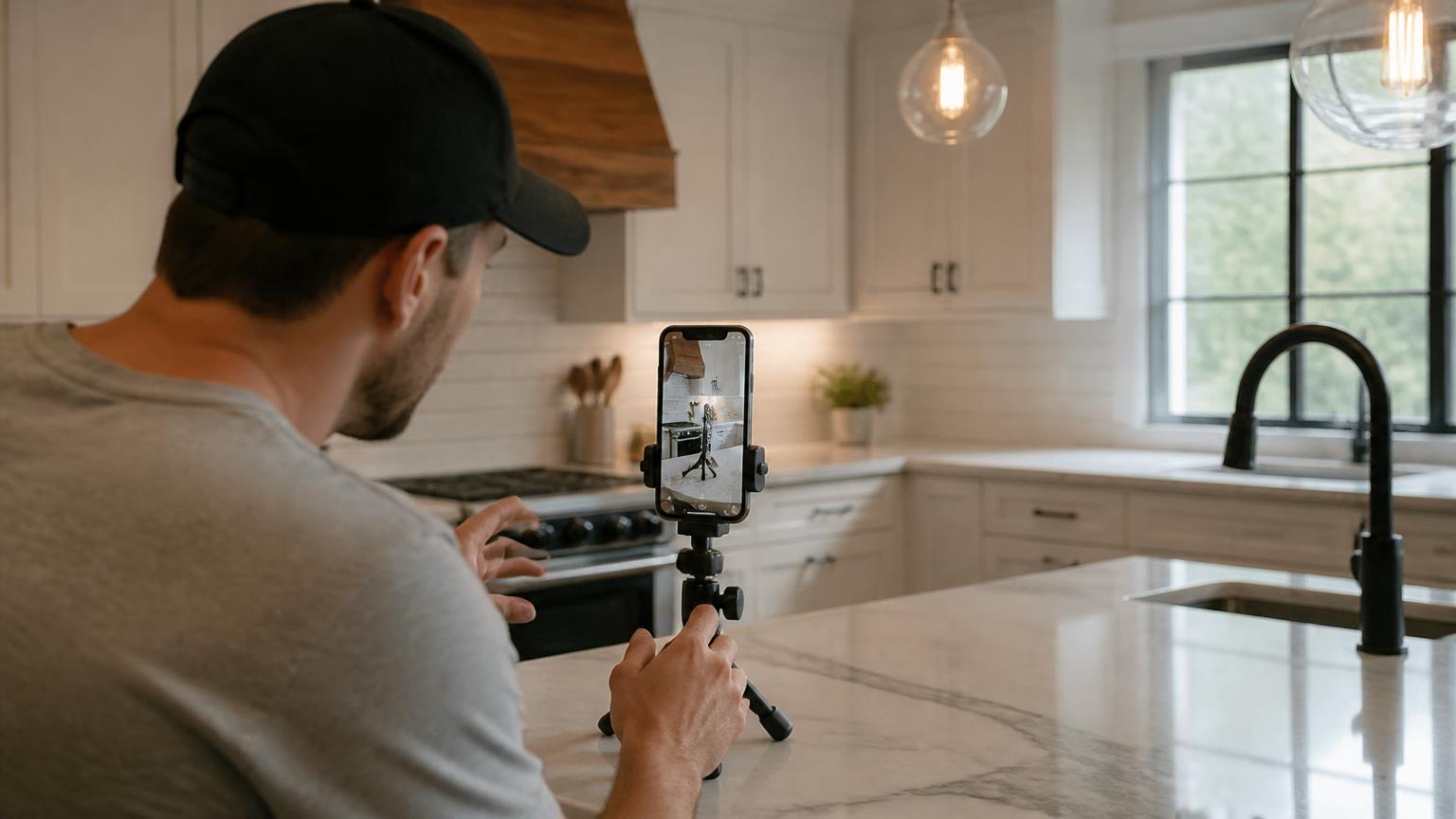
Meta's auction rewards creative that holds attention. For contractors, the highest-performing formats are before-and-afters, on-truck first-person walkthroughs, and homeowner testimonials filmed on a smartphone. Studio-quality video usually underperforms — it looks like an ad and users scroll past it.
Winning creative patterns: UGC-style walkthroughs (a technician explaining what they just fixed), transformation reveals (before/after with cinematic pacing), owner-on-camera testimonials from real customers, and problem-first hooks ('If your roof looks like this, you have 30 days before it leaks').
The 3-second hook rule
80% of Meta ad drop-off happens in the first three seconds. Every ad should lead with pattern-interrupt visuals — motion, a bold statement, a surprising before/after — that stops the scroll before any 'branding' happens. Save the logo, the address, and the phone number for the CTA card.
Lead ads vs website conversion
Instant Lead Forms produce cheaper leads (often 40–70% lower CPL) but noticeably lower intent. Website-form conversions cost 2–3x more per lead but close 3–5x higher because the friction of visiting the site self-selects for real intent.
The right mix depends on your close rate and CSR capacity. If you have surplus CSR capacity, lead forms fill the calendar. If your estimators are the bottleneck, website conversions protect their time. Most operators end up running both, with lead forms for lower-ticket categories and website conversions for high-ticket projects.
The signal problem: why CAPI is not optional
Since iOS 14 and subsequent privacy changes, Meta's pixel loses roughly a third of conversion signal. The Conversions API (CAPI) — server-side conversion tracking that fires from your backend rather than the browser — recovers most of it. Contractors who install CAPI properly see 20–40% lower CPL within the first month as the algorithm re-optimizes on cleaner data.
CAPI setup is a one-time engineering task. Every contractor Meta account in 2026 without CAPI is bidding blind. If your agency has not implemented it, they are not competent in modern Meta advertising.
Audience strategy: broad beats narrow in 2026
The old playbook — layer three interests, exclude broad audiences, tightly control targeting — has been dead for two years. Meta's Advantage+ audience and broad targeting consistently outperform interest-layered targeting for service businesses because the algorithm has more conversion data than any human can encode.
The productive layers on top of broad: geographic radius (5–25 miles from your service center), age filtering (typically 28–70 for homeowner-oriented services), and homeowner-specific special ad category behavior when applicable.
Retargeting: the highest-ROI Meta spend
Warm-audience retargeting — website visitors, form abandoners, past customers — regularly runs 4–8x the ROAS of cold prospecting on Meta. Every contractor should have three always-on retargeting audiences: website visitors from the last 30 days, video viewers from the last 60 days, and past customer email lists uploaded and refreshed monthly.
Retargeting creative should be different from prospecting creative — testimonials, warranties, financing offers, and 'ready to book?' language work better than the same top-of-funnel content the audience already saw.
The special ad category constraint
Mortgage, credit, insurance, and employment ads are classified as 'special ad category' by Meta, which removes granular demographic targeting. For loan officers and insurance agents, this means broad targeting with heavier creative focus is the only path — every advantage comes from the ad itself, not the targeting.
Budget and iteration cadence
$40–$100/day is the minimum viable spend per ad set to give Meta enough data to optimize. Below that, campaigns never exit learning and CPL fluctuates wildly. Test one new creative variant per week; retire the worst performer per ad set every two weeks; refresh entire creative libraries monthly to fight creative fatigue.
Frequently Asked
Questions & answers
Do Facebook ads work for contractors?
Yes, when creative is authentic and CAPI is properly configured. Boosted posts and generic stock imagery do not — that is where most contractor Meta budgets are wasted.
What is the cheapest cost per lead I can expect on Meta?
Lead-form CPL of $15–$45 is common in home services; website-conversion CPL runs $40–$120. The right metric is CAC, not CPL — lead-form leads convert at 30–50% of website-conversion rates.
Should I use Advantage+ campaigns?
For most home services, yes. Advantage+ removes the manual layering that human account managers do worse than the algorithm. Just make sure CAPI is installed so the algorithm has clean signal to optimize on.
What creative works best for home services?
Real before-and-afters, homeowner testimonials on smartphone video, and on-truck technician walkthroughs. Studio-quality creative usually underperforms because users recognize it as an ad.
How much should I spend to test if Meta works for me?
$2,500–$5,000 over 30 days with proper CAPI, competent creative, and one campaign per service line is the minimum viable test. Below that budget the algorithm never has enough data to prove or disprove the channel.
Do I need a video, or do image ads still work?
Both work, but video outperforms image by 30–60% in most contractor verticals. A single well-produced 30-second video shot on a smartphone beats ten static image variants.
Put this into practice
Check your market for exclusive leads
See whether your service area and category are still open for exclusive representation.
Check availability