Lead Generation Guides
How to Get Concrete Leads: 8 Driveway, Patio, and Flatwork Channels Ranked for 2026
Discover the 8 best channels to get concrete leads for driveways, stamped patios, and flatwork ranked by ROI, intent, and close rates for 2026.
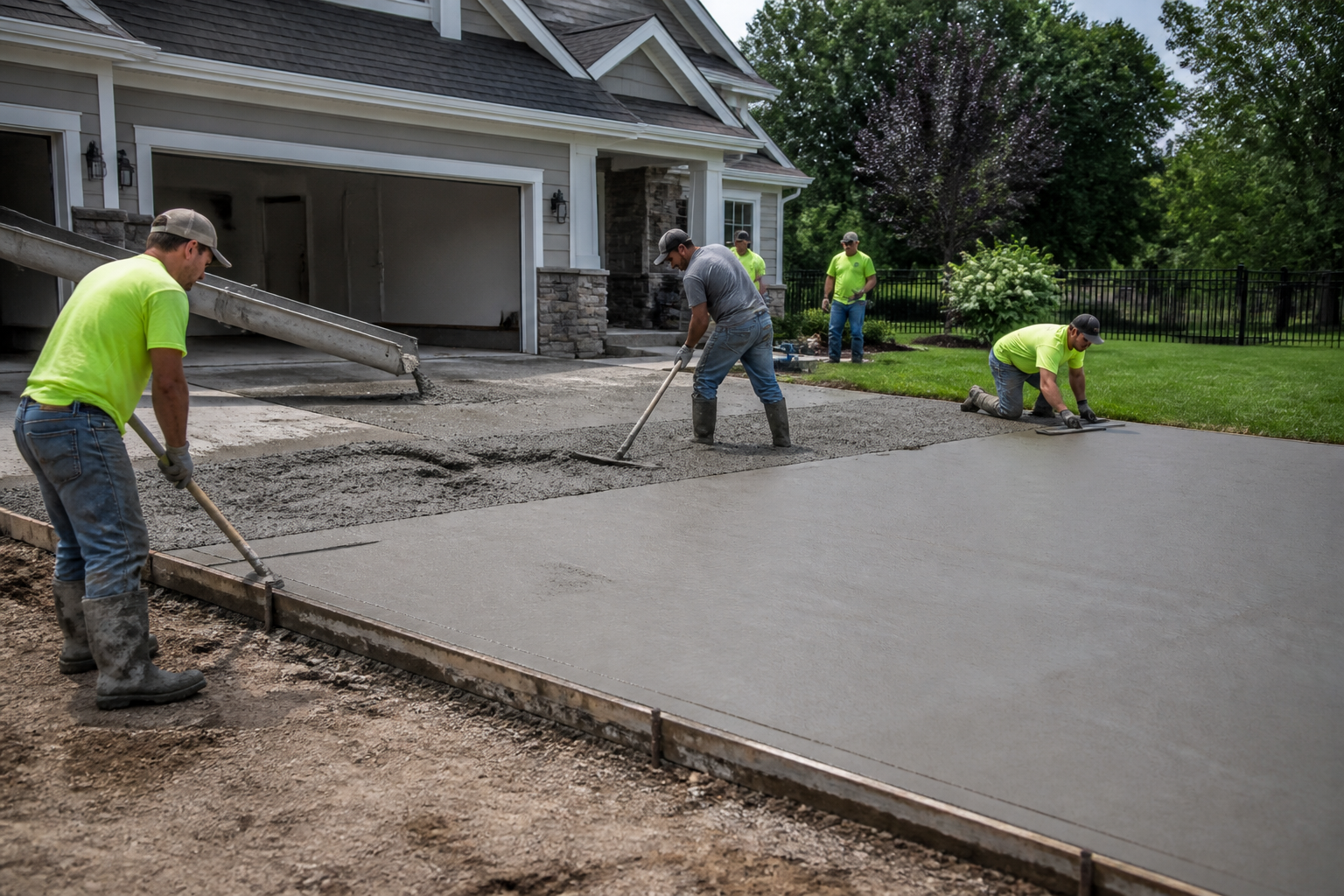
To get high-ticket concrete leads, contractors must focus on customer acquisition channels that target property owners actively seeking complete driveway replacements, custom stamped patios, foundations, and commercial flatwork. Concrete projects carry high ticket sizes, frequently ranging from $5,000 to over $25,000. Wasting sales time on minor spalling repairs, hairline crack filling, or two-square-foot patch jobs destroys margin and operational efficiency.
Generating consistent, profitable concrete leads requires a clear understanding of lead quality, cost per acquisition, and buyer intent. Below is a comprehensive analysis ranking the eight best concrete lead acquisition channels for 2026 based on job intent, exclusivity, scaling potential, and overall return on investment.
Concrete Lead Channels Ranked for 2026
1. Exclusive Pay-Per-Lead (PPL) Programs
Exclusive pay-per-lead programs rank as the highest-performing acquisition channel for concrete contractors seeking high-ticket flatwork. Unlike generic lead brokers that sell the same homeowner inquiry to five competing companies, exclusive PPL programs connect a single homeowner directly to your office or estimator in real time.
Through targeted landing pages and strict qualifying criteria, exclusive pay-per-lead systems filter out low-value requests like minor crack repair or small slab patches. Contractor operations benefit from clear unit economics: you pay only when an inbound phone call or qualified form submission meets agreed criteria for project scope and geographic area. Utilizing concrete lead generation services designed around exclusive delivery ensures your estimators spend time bidding major driveways, decorative patios, and commercial pours rather than competing in price wars.
2. Google Business Profile & Local Map Pack
Google Business Profile (GBP) remains a dominant channel for local service inquiry volume. When a homeowner searches for concrete driveway installation near me, Google displays the Local 3-Pack at the top of organic search results. Property owners viewing these listings exhibit high intent and frequently call directly from the map interface.
Capturing volume through GBP requires disciplined optimization. Contractors must maintain exact Name, Address, and Phone number (NAP) consistency across directories, post regular photographs of completed stamped concrete and driveway pours, and systematically collect customer reviews. While organic local map placements take months to establish, the ongoing cost per lead is low once rankings stabilize.
3. Google Local Services Ads (LSA)
Google Local Services Ads sit above standard pay-per-click search ads and traditional organic listings. Operating on a pay-per-lead model directly backed by the Google Guaranteed badge, LSA allows concrete contractors to show up when homeowners search for local concrete contractors or driveway contractors.
LSA offers moderate cost control because contractors pay for direct phone calls rather than clicks. However, lead quality can fluctuate. Homeowners utilizing LSA often select the top three listed providers simultaneously, making immediate response times critical. Additionally, Google's dispute process for unqualified calls (such as scope mismatches or service inquiries outside your coverage area) requires strict monitoring to avoid paying for invalid inquiries.
4. Organic Search Engine Optimization (SEO) & AI Search Optimization
Traditional search engine optimization combined with AI search optimization targets homeowners using Google, Bing, ChatGPT, and Google Gemini to research flatwork options. Homeowners contemplating a $15,000 stamped patio build typically spend weeks researching patterns, concrete thickness, sealer types, and local pricing.
By publishing structured, technical content that answers specific pricing and material questions, concrete companies capture early-stage and mid-funnel buyers. Integrating schema markup and structured data allows search engines and AI assistants to extract your service offerings, service areas, and project galleries. Combining structured technical SEO with AI search optimization services positions your business as the recommended contractor when users ask AI tools for flatwork recommendations in your city.
5. Google Pay-Per-Click (PPC) Search Ads
Google Search PPC allows contractors to bid on exact-match commercial search phrases such as concrete driveway contractor, stamped concrete patio company, or commercial concrete foundation installer. PPC offers precise control over targeting, budgeting, and geographic coverage.
Because keywords associated with concrete flatwork are highly competitive, bid costs per click can reach substantial figures in major metropolitan markets. To maintain profitable acquisition costs, campaigns must utilize negative keyword lists that explicitly block terms like repair, patch, crack fill, mudjacking, and DIY. Without rigorous management, PPC campaigns quickly drain ad budgets on low-intent clicks.
6. Meta Ads (Facebook & Instagram Visual Campaigns)
Concrete flatwork is inherently visual. High-resolution photos and video tours showcasing stamped concrete patios, exposed aggregate pool decks, and decorative driveways perform exceptionally well on Meta platforms.
Meta ads allow contractors to target homeowners within specific zip codes, household income brackets, and home equity profiles. However, social media users are passively scrolling rather than actively searching for immediate contractor services. As a result, lead intent is lower than search-based channels. Meta campaigns require strong creative, clear offer structures, and automated follow-up sequences to qualify prospects before booking sales appointments.
7. Shared Lead Aggregators
Shared lead aggregators collect homeowner requests and instantly resell the lead data to four to six competing contractors simultaneously. While these platforms often advertise low cost per lead metrics, the actual cost per acquired job is frequently higher than alternative channels.
Shared leads initiate an immediate race to the bottom on price. Contractors must contact the prospect within 30 seconds to compete, and homeowners are rapidly overwhelmed by multiple contractor calls. High refund friction, non-exclusive contact info, and low close rates make shared lead aggregators an inefficient channel for growth-oriented concrete companies.
8. Yard Signs, Jobsite Banners, and Direct Mail
Traditional offline marketing methods still provide localized brand exposure. Placing branded jobsite banners and yard signs at active installation sites allows neighbor property owners to inspect real flatwork quality in their own community.
Direct mail campaigns targeting older subdivisions with deteriorating original asphalt or concrete driveways can generate solid project inquiries. However, offline channels offer limited tracking capabilities and scaling predictability compared to digital lead sources.
Comparing Concrete Lead Channels
| Lead Channel | Average Intent | Lead Exclusivity | Typical Close Rate | Scaling Speed |
|---|---|---|---|---|
| Exclusive Pay-Per-Lead | Very High | 100% Exclusive | 25% - 40% | Fast |
| Google Business Profile | High | Exclusive | 20% - 35% | Moderate / Slow |
| Google Local Services Ads | High | Semi-Exclusive | 15% - 30% | Moderate |
| SEO & AI Optimization | High | Exclusive | 20% - 30% | Slow / Long-Term |
| Google Search PPC | High | Exclusive | 15% - 25% | Fast |
| Meta (Facebook/IG) Ads | Medium | Exclusive | 8% - 15% | Fast |
| Shared Aggregators | Low | Non-Exclusive | 3% - 8% | Fast |
| Yard Signs & Direct Mail | Medium | Exclusive | 10% - 20% | Slow |
Filtering Patch Repairs from High-Ticket Concrete Flatwork
A primary friction point in concrete lead generation is separating high-ticket pours from micro-repairs. Minor patch jobs generate minimal profit while consuming estimator travel time and fuel. Concrete contractors must establish strict qualification filters within their lead intake workflows.
Understanding contractor lead pricing dynamics helps operators evaluate what a true flatwork lead is worth. To protect sales bandwidth, intake systems should incorporate mandatory qualification filters:
- Minimum Square Footage Requirements: Require prospect inquiries to state approximate dimensions or select project scales (such as full driveway replacement versus single crack repair).
- Project Type Categorization: Explicitly list supported services on intake forms: new driveways, full tear-out and replacements, stamped patios, foundation slabs, and commercial flatwork.
- Property Ownership Verification: Ensure the contact is the primary property owner authorized to make capital improvements.
- Timeline and Budget Readiness: Confirm the homeowner plans to execute the work within 30 to 60 days rather than conducting casual price gathering for future years.
Evaluating the structural differences between a pay-per-lead model for contractors and open-ended pay-per-click spending ensures concrete businesses only pay for inquiries that match their ideal project scope.
Speed to Lead and Follow-Up Workflows
Capturing high-intent concrete leads is only the first phase of customer acquisition. Concrete replacement and patio construction are major financial decisions for homeowners. The contractor that establishes contact first and maintains clear communication routinely wins the job.
Implementing a strict five-minute lead response rule drastically increases contact rates and estimate bookings. When an exclusive inbound inquiry arrives, your office team or automated dispatch system should complete these operational steps:
- Immediate Phone Outreach: Call the prospect within five minutes of lead submission while their project requirement is top of mind.
- Automated SMS Confirmation: Send an instant text message confirming receipt of their inquiry along with a link to your project gallery or online booking calendar.
- Pre-Qualification Screening: Verify project type, total square footage, and budget expectations before dispatching an estimator to the property.
- On-Site Estimating Protocol: Provide professional, detailed digital estimates within 24 hours of site measurement.
- Structured Follow-Up Sequence: Execute a multi-touch follow-up campaign via phone and email over a 14-day period until a contract decision is confirmed.
Concrete contractors evaluating marketing channels must weigh immediate ad costs against conversion performance. Carefully evaluating pay-per-lead versus pay-per-click model economics allows contractors to maintain consistent job flow without overextending sales bandwidth or marketing budgets.
Partner with Exclusive Concrete Lead Experts
Generating steady, high-margin driveway, patio, and flatwork jobs requires consistent access to exclusive, qualified inquiries. Relying on shared aggregators or unoptimized ad campaigns leads to low conversion rates and wasted sales efforts.
Lead Search Pros delivers high-intent, exclusive concrete leads directly to local contractors across the United States. We manage campaign targeting, pre-qualify lead inquiries, and enforce strict territory exclusivity so you can focus on pouring quality concrete and closing profitable estimates.
Ready to secure exclusive flatwork and driveway leads in your territory? Visit our site to check market availability and secure exclusive coverage for your service area today.
Frequently Asked
Questions & answers
What is the average close rate for exclusive concrete leads?
Exclusive concrete leads typically achieve close rates between 25% and 40% when contractors respond within five minutes and maintain a structured on-site estimating process. Because exclusive leads are delivered to only one contractor, there is no price competition against other local crews on the initial contact.
How can concrete contractors avoid paying for small repair inquiries?
Contractors can filter out small repair inquiries by deploying pre-qualification questionnaires on landing pages, using negative keywords (blocking terms like crack repair, patch, mudjacking, or DIY) in search campaigns, and utilizing pay-per-lead partners that offer credit policies for leads falling below agreed project scope thresholds.
Why do shared concrete leads have lower conversion rates?
Shared leads are sold simultaneously to four to six competing contractors. This creates immediate aggressive outbound calling from multiple estimators, irritating the homeowner and turning the bid into a rapid price war focused primarily on lowest price rather than quality, credentials, or craftsmanship.
How long does it take for Local SEO to generate concrete flatwork leads?
Local SEO and Google Business Profile optimization typically take three to six months to produce consistent organic inbound call volume. However, once established, local search optimization delivers a low ongoing cost per lead compared to continuous ad spend.
References
Put this into practice
Check your market for exclusive leads
See whether your service area and category are still open for exclusive representation.
Check market availabilityKeep reading
Comparisons
Angi (HomeAdvisor) vs Lead Search Pros: Shared Marketplace Leads or Exclusive Leads?
12 min read
Comparisons
Thumbtack vs Lead Search Pros: Pay-Per-Contact Marketplace or Exclusive Pay-Per-Lead?
11 min read
Comparisons
Google Local Services Ads vs Lead Search Pros: Which Pay-Per-Lead Option Fits You?
12 min read