Landscaping
Landscaping Lead Gen: Turning Curb Appeal Into Signed Contracts
How successful landscaping and lawn care operators build a lead engine around design-build, recurring maintenance, and seasonal add-ons — with segmented funnels, high-visual creative, and pre-sold winter programs.
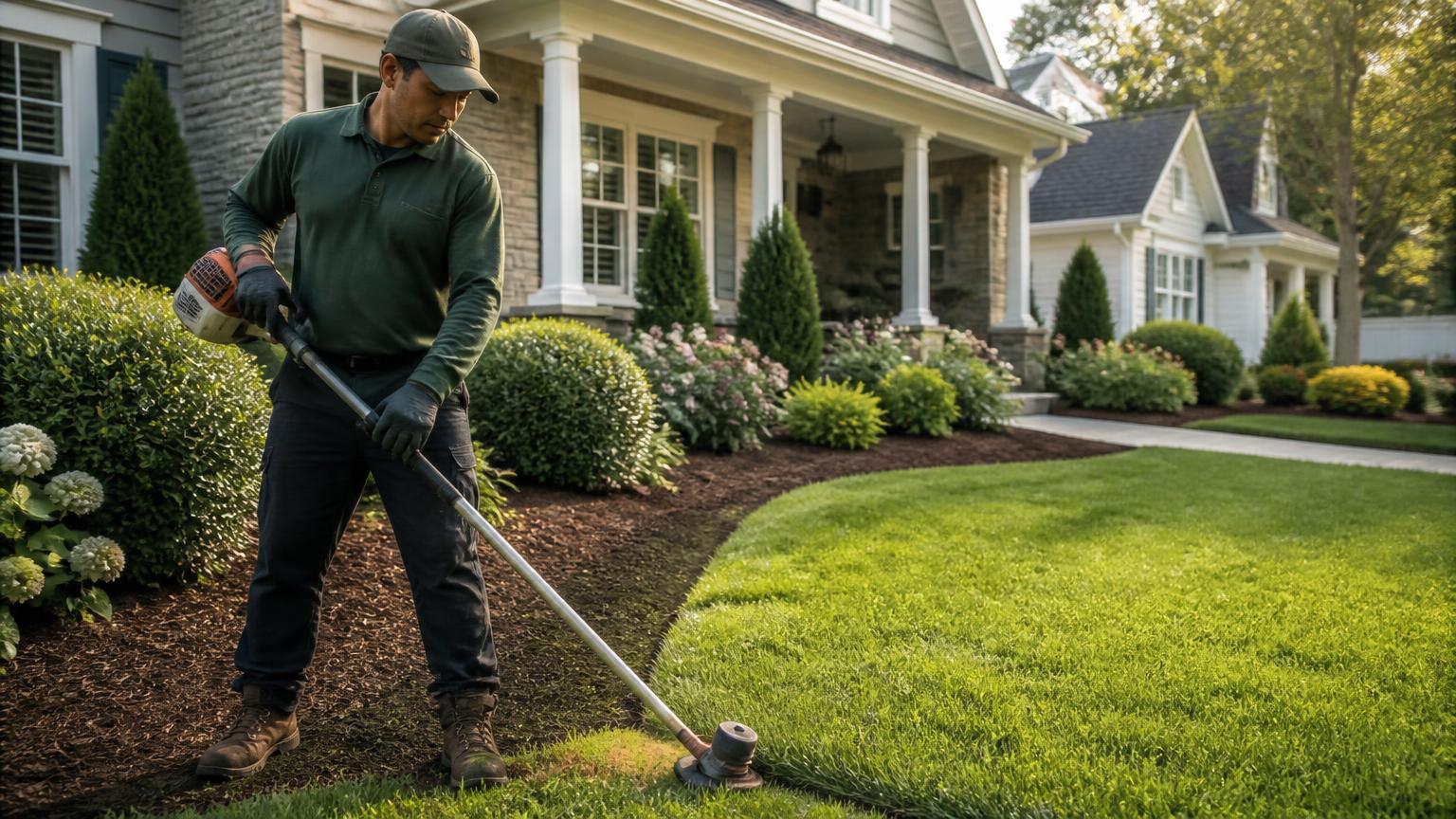
Landscaping is deceptively hard to market. The category spans $60 mow-and-blow visits, $2,800 spring cleanups, $18,000 sod-and-irrigation installs, and $120,000 outdoor living builds with pergolas and pools. A lead engine that treats all inquiries the same will drown your estimators in tire-kickers and starve your design-build team.
This article covers the segmented funnel architecture, visual creative frameworks, seasonal offer construction, and retention systems that make landscaping lead generation profitable across every ticket band — from weekly mowing routes to six-figure hardscape builds.
Segmenting by ticket size and service type
Build separate landing pages, separate ad campaigns, and separate CRM pipelines for maintenance, small install, and design-build. Each has its own average ticket, close rate, sales cycle, and margin profile. Blending them in one funnel destroys your ability to optimize creative, targeting, or messaging for any of them.
A working segmentation: (1) recurring maintenance (mowing, weekly service, fertilization programs), (2) one-time services (spring cleanup, mulch install, tree work), (3) small install ($3K–$15K sod, irrigation, planting design), (4) design-build ($20K+ hardscape, outdoor living, pool decks, full transformations). Each pipeline gets its own qualification script and follow-up cadence.
Visual creative is the entire game
Landscaping is the most visually-driven trade in home services. High-quality before-and-after photography — shot from consistent angles at consistent times of day — outperforms any written testimonial. A $600 smartphone gimbal, a $150 tripod, and a disciplined 'shoot every finished project from these five angles' policy produces the creative library that funds a year of ads.
The specific shots that convert: wide-angle establishing before/after, hero angle from the primary viewing position (usually the customer's back deck or kitchen window), close-up detail of key features (fire pit, pergola, planting bed), a 'people using it' shot if you can capture one, and a drone overhead if the project justifies it.
The seasonal cash flow rhythm
Landscaping cash flow follows the growing season everywhere except deep-south markets. Q2 and Q3 produce 65–75% of annual revenue. Q4 and Q1 either hemorrhage cash or are pre-sold into add-on services (fall cleanup, holiday lighting, snow removal in cold markets).
Pre-selling winter services in September to your existing maintenance base is dramatically cheaper and more profitable than paid acquisition for them in December. A single September email to your maintenance list can pre-sell 30–60% of your winter revenue.
The design-build long sales cycle
Design-build projects have 30-to-180-day sales cycles. The lead who calls in April is often installing in July after a design phase that includes multiple revisions, pricing rounds, and sometimes a competing bid.
Structured design-build follow-up: initial site visit within 5 business days, design presentation within 3 weeks, revision cycle with clear pricing changes, and a mid-cycle 'what's your timeline looking like?' check-in every 14 days until either signed or explicitly declined. Design-build leads that go silent are almost never dead — they are stuck on a single decision point, and a well-timed check-in often revives them.
Recurring maintenance as the retention engine
A signed maintenance customer is worth 4–8x a one-time service customer over five years and refers dramatically more work than one-time customers do. Every one-time service should have a scripted maintenance upsell at completion.
The economics: a $180/month maintenance customer produces $2,160 of annual recurring revenue. Even at 20% churn, five-year LTV is $10,000+ before referrals and add-on services. The math justifies aggressive first-year discounts to lock customers into recurring programs.
Referral programs that compound
Landscaping is uniquely referral-friendly because every finished project is a permanent, visible advertisement in the neighborhood. Structured neighbor-referral programs — a $200 gift card for both parties on a signed maintenance contract, a signed jobsite yard sign, a 'new neighbor introduction' letter to adjacent homes — regularly produce 20–40% of pipeline for mature operators.
The right lead sources per segment
Maintenance: exclusive leads, LSA, and neighborhood referral programs. Small install: exclusive leads plus Meta with strong visual creative. Design-build: exclusive leads, Houzz presence, Instagram and Pinterest for top-of-funnel discovery, and referrals from architects and interior designers. The correct source mix looks different for each segment; running one generic campaign across all three produces mediocre results everywhere.
Frequently Asked
Questions & answers
What is the best lead source for high-ticket landscape design?
Exclusive leads combined with high-visual Meta creative, Houzz presence, and architect/interior designer referral partnerships typically outperform generic directory listings.
How do I market landscaping in winter?
Sell add-on services (holiday lighting, snow removal, planning for spring) to existing customers. Cold acquisition is expensive and low-intent in Q4/Q1 outside deep-south markets.
What close rate should I expect on landscaping leads?
Maintenance: 35–55%. Small install: 25–40%. Design-build: 15–30% but with much higher ticket size.
How important is having a portfolio website?
Critical for design-build and premium install. Less important for pure maintenance where Google Business Profile carries most of the trust signal.
Should I offer free design consultations?
For design-build over $15K, yes — the consultation is where you sell yourself. For anything under, use a paid design deposit ($150–$400) applied to the project. It filters tire-kickers and covers your design time.
Put this into practice
Check your market for exclusive leads
See whether your service area and category are still open for exclusive representation.
Check availability