AI Search
Voice and Conversational Search for Local Services: What Actually Moves the Needle in 2026
Most voice SEO advice is noise. Here is what actually drives calls from voice and conversational search for HVAC, plumbing, garage door, and restoration companies in 2026.
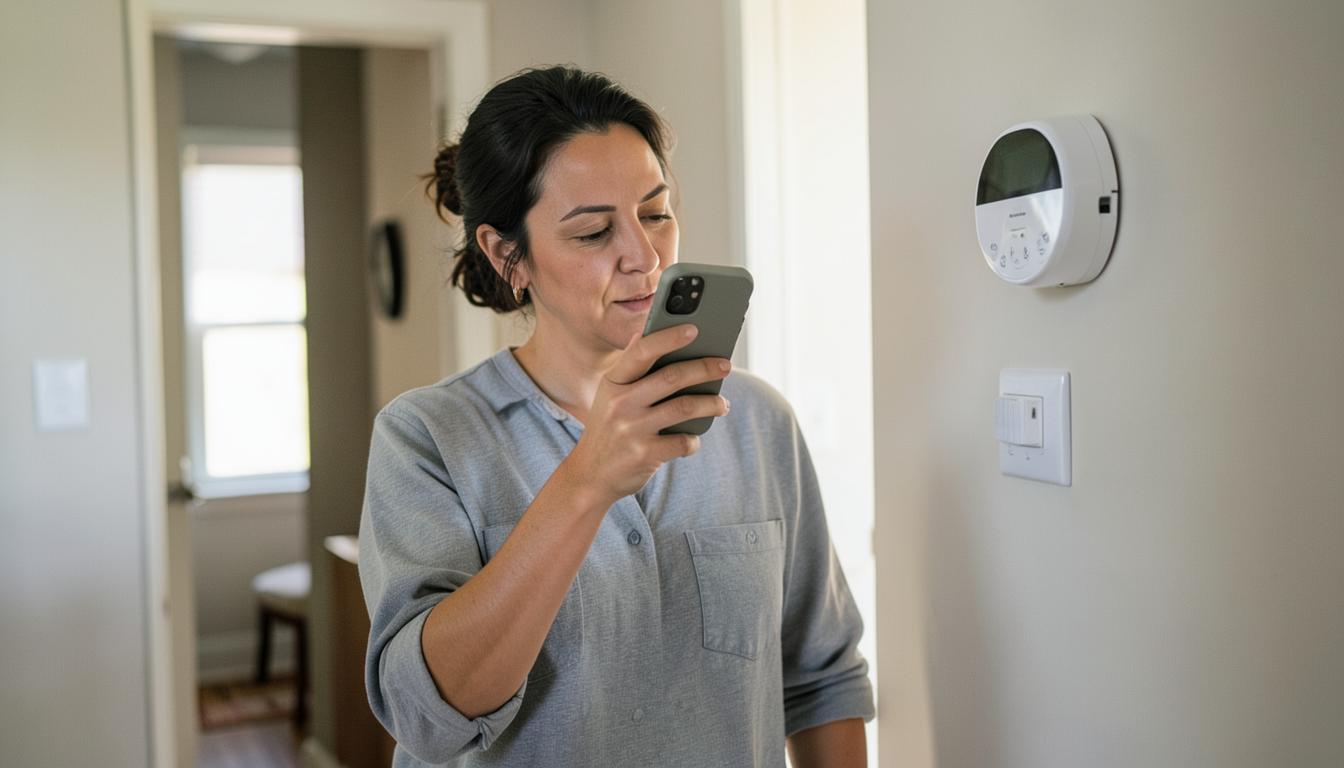
"Voice search" as a distinct SEO discipline mostly died around the time smart speakers stopped being a novelty and became a kitchen appliance. What replaced it is bigger and less understood: conversational, assistant-mediated search that spans phone assistants, in-car systems, smart speakers, and AI chat interfaces, all pulling from the same underlying local data. For a local service business, the practical question is not "how do I rank for voice" — it is "what does an assistant say when someone asks it to find a plumber right now, and why does it say that."
That distinction matters because most published voice SEO advice — write in question form, target long-tail phrases, add speakable markup — treats voice as a content problem. In practice it is overwhelmingly an operational data problem. Assistants answer with businesses whose hours, service area, phone number, and availability are unambiguous and verifiable, because a wrong answer for a locksmith locked out at midnight is a worse outcome for the assistant than no answer at all.
This guide covers the query patterns that actually matter by vertical, why operational readiness beats content tricks, how to keep your data consistent across Google Business Profile, Apple Business Connect, and Bing Places, and how to measure whether any of it is producing calls. For the broader picture of how AI systems surface local businesses, see our guide to SEO and AI search optimization.
What voice search actually is now
There is no longer a clean line between "voice search" and "search." A driver asking a car's assistant to find a tow truck, a homeowner asking a phone assistant who's open right now for a garage door repair, and someone typing a full sentence into an AI chat interface are all doing the same thing: issuing a conversational, intent-heavy query and expecting a direct, actionable answer rather than a list of blue links.
What differs from typed search is the interaction shape. Voice and assistant queries are almost always immediate-need, hands-busy, and single-answer. The user does not want ten options to compare — they want one good one, right now, with a way to act (call, get directions, or book) in the next few seconds. That changes what "ranking" even means: the assistant is choosing a single business to surface or read aloud, not populating a results page.
This is also why conversational AI answer engines and voice assistants increasingly draw from the same pool of structured, verifiable local data rather than from crawled web pages alone. Getting cited by one increasingly means getting cited by the other.
Why most voice SEO advice is noise
The standard advice — write FAQ content in question-and-answer form, target long-tail conversational keywords, add speakable schema — is not wrong, exactly, but it treats a data-completeness problem as a content-writing problem. Content can help an assistant understand what you do; it cannot make an assistant trust that you are actually open, actually answer the phone, and actually serve the caller's zip code.
The businesses that consistently get surfaced in voice and assistant answers are not the ones with the most cleverly phrased FAQ page. They are the ones whose Google Business Profile, website, and directory listings agree on every fact an assistant needs to give a confident answer, and whose phones get answered when the referral comes through. Content matters at the margin; operational data and responsiveness matter at the core.
The query patterns that actually matter, by vertical
Conversational queries cluster around a small number of intent patterns, and which ones dominate depends heavily on the trade. Understanding your vertical's pattern tells you which operational facts to get right first.
HVAC: "no heat" and "no AC" emergencies
The dominant pattern is urgency plus temperature extreme: "who can come fix my furnace tonight," "AC not working who's open now." These queries spike hard on the coldest and hottest days of the year and skew heavily toward after-hours. An assistant answering this needs current hours (including holiday and weekend hours) and confidence that the number connects to a live person, not a voicemail tree.
Plumbing: "emergency plumber near me" and burst-pipe language
Plumbing queries are less seasonal but similarly urgency-driven — burst pipe, no hot water, sewage backup. Because water damage compounds by the hour, the assistant's implicit filter is speed to answer, which is exactly why call-answering performance, not just listing accuracy, determines whether repeat referrals continue.
Garage doors: safety and access framing
Garage door queries often frame around being locked out or a door stuck open, which reads as a security concern as much as a repair need. Same-day availability language on the profile and website matters more here than elsewhere, because the underlying anxiety is about the property being exposed.
Restoration: disaster-adjacent and insurance-adjacent phrasing
Water and fire restoration queries frequently pair the service need with insurance language — "water damage company that works with insurance near me." Assistants and AI answer engines weight explicit statements about insurance coordination and licensing more heavily here than in trades where that is assumed.
Voice mostly rewards operational readiness
If there is one takeaway from this guide, it is that voice and conversational search reward businesses that are operationally ready to be found, not businesses that have optimized copy. Four things do the heavy lifting.
Accurate hours, including holiday hours
Standard weekly hours are table stakes. Holiday hours are where most local businesses fail: leaving Google Business Profile's holiday hours field blank means the assistant either guesses wrong or skips you in favor of a competitor who filled it in. Update holiday hours at the start of each quarter, not the week of.
Click-to-call and a phone number that actually gets answered
An assistant that recommends you and gets a voicemail has made itself look unreliable — it will deprioritize you over time. Call-answering speed and after-hours coverage are not a customer service nicety in this context; they are a ranking input, indirectly, because unanswered calls show up in the same call-tracking and profile-interaction signals that inform how prominently platforms surface you.
Real booking availability
Where a platform can check or display next-available appointment slots, keeping that calendar current prevents the assistant from recommending you into a dead end. A profile that always shows availability but never actually has any erodes trust with both the platform and the caller.
Data completeness across the platforms that feed assistants
Google Business Profile still feeds the largest share of voice and AI-mediated local answers, but it is not the only source. Apple Business Connect powers Siri and Apple Maps answers, and Bing Places feeds Microsoft's Copilot and Bing-powered assistants. Businesses that only maintain their Google profile leave gaps that show up as wrong or missing answers on other assistants.
The name, address, phone number, hours, categories, and service area should match exactly across all three, plus your website and major directories. Inconsistency does not just confuse customers — it actively lowers a platform's confidence in which facts to trust, which is the opposite of what you want when the platform is deciding whether to speak your business's name aloud.
For a deeper walkthrough of profile optimization mechanics, see our guide to Google Business Profile for leads.
How conversational phrasing should shape FAQ content
Conversational queries are full sentences with context: "do you fix garage door openers or just the door itself," "can a plumber come out on a Sunday." Your FAQ content should mirror that specificity in the question itself, then answer directly in the first sentence, without padding the answer with keyword repetition.
The practical test is whether the answer would sound reasonable if read aloud verbatim by an assistant. If an answer only makes sense embedded in a full page with headers and context around it, it is written for a scanning human, not for extraction. Keep answers self-contained, factual, and roughly 40 to 80 words.
Avoid the temptation to write ten near-duplicate FAQ variants targeting keyword permutations of the same question. That pads the page without adding information, and it does not fool extraction systems, which increasingly de-duplicate near-identical Q&A pairs.
Speakable and structured data's limited but real role
Speakable schema, which flags specific content as suitable for text-to-speech, has narrow and inconsistent support and should not be treated as a primary strategy. It is worth adding to a well-structured FAQ or summary section as a low-cost signal, but it will not compensate for missing or inconsistent business data.
FAQPage and LocalBusiness structured data do more real work here than speakable does, because they give any parsing system — voice assistant, AI answer engine, or search crawler — an unambiguous, machine-readable version of the same facts your profile and page state in prose. For the mechanics, see our schema markup guide for local service businesses.
Measuring whether any of this is producing calls
Voice and conversational search do not show up as a labeled traffic source in most analytics tools, so measurement has to happen indirectly. Three practical signals: call tracking numbers segmented by source, the "calls" metric inside Google Business Profile insights, and after-hours or off-peak call volume, which is disproportionately assistant- and mobile-referred.
A meaningful uptick in after-hours calls with no corresponding change in your ad spend is a reasonable signal that organic and assistant-mediated discovery is doing work. Because the traffic is largely unattributable at the click level, treat this as a directional read rather than a precise attribution model.
A practical checklist
Confirm hours, including holiday hours, are current on Google Business Profile, Apple Business Connect, and Bing Places this quarter. Confirm your name, address, phone, and categories match exactly across all three plus your website footer.
Add or refresh FAQ content phrased as full, specific questions with direct, self-contained answers. Verify FAQPage and LocalBusiness structured data validates without errors. Audit call-answering speed and after-hours coverage, since a recommendation that ends in voicemail actively hurts you over time.
Set up call tracking segmented by time window so you have a baseline before making changes, and review after-hours call volume quarterly rather than expecting a fast, visible spike.
Where the real ROI sits versus paid leads
Voice and conversational search optimization is a compounding, low-cost-per-call channel over time, but it is slow to build and impossible to guarantee, because it depends on platform trust that accrues gradually. It is not a substitute for predictable volume when you need calls this week, and it should not be sold to you as one.
The more realistic way to think about it is as a complement to paid, performance-based lead generation: voice and AI-mediated discovery lowers your cost per acquisition over the long run by capturing demand you would otherwise pay for, while pay-per-lead programs keep the pipeline full in the meantime. Businesses that rely on one channel exclusively tend to have volatile months; the ones with steady pipelines run both.
Frequently Asked
Questions & answers
Do I need to write content specifically for voice search?
Not separately from good FAQ content. Write full, specific questions with direct, self-contained answers of 40 to 80 words, and that content will serve voice assistants, AI answer engines, and typed search alike without needing a distinct "voice" version.
Does speakable schema actually help my business get read aloud by assistants?
Its support is narrow and inconsistent across platforms, so treat it as a small supplemental signal rather than a strategy. Accurate business data and well-structured FAQPage markup do more of the real work.
Why does my competitor get recommended by Google Assistant and I don't, even though we have similar reviews?
The most common cause is data inconsistency or incompleteness — missing holiday hours, mismatched categories across platforms, or a phone number that is slow to answer. Assistants favor businesses whose facts they can verify with confidence.
How much does after-hours call volume actually matter for voice search?
It is one of the more reliable indirect signals available, since assistant-mediated discovery is disproportionately used outside business hours when people are searching hands-free or from a car. A rising share of after-hours calls with flat ad spend suggests organic and assistant referrals are contributing.
Should I list my business on Apple Business Connect and Bing Places if most of my customers use Google?
Yes, because Siri, Apple Maps, and Microsoft Copilot pull from those platforms independently of Google, and leaving them incomplete creates gaps and inconsistencies that can undermine trust in your data everywhere else too.
Can I get quick results from voice search optimization if I need leads this month?
Not reliably. Voice and AI-mediated discovery compounds over months as platforms build confidence in your data, so it should complement, not replace, faster channels like pay-per-lead programs when you need volume immediately.
What's the single highest-impact fix most local businesses are missing?
Holiday and after-hours coverage. Blank holiday hours on Google Business Profile is one of the most common reasons an assistant skips a business that would otherwise be a good answer.
Do AI chat tools like ChatGPT use the same signals as voice assistants?
They draw on overlapping data sources — structured business data, review platforms, and crawled web content — so improving data completeness and FAQ clarity tends to help both voice assistants and AI answer engines simultaneously.
Put this into practice
Check your market for exclusive leads
See whether your service area and category are still open for exclusive representation.
Check availability