Comparisons
Is Thumbtack Worth It for Pressure Washing Businesses? An Honest Breakdown
Is Thumbtack worth it for pressure washing businesses? Get an honest verdict on shared contacts, booking costs, route density, and exclusive lead alternatives.
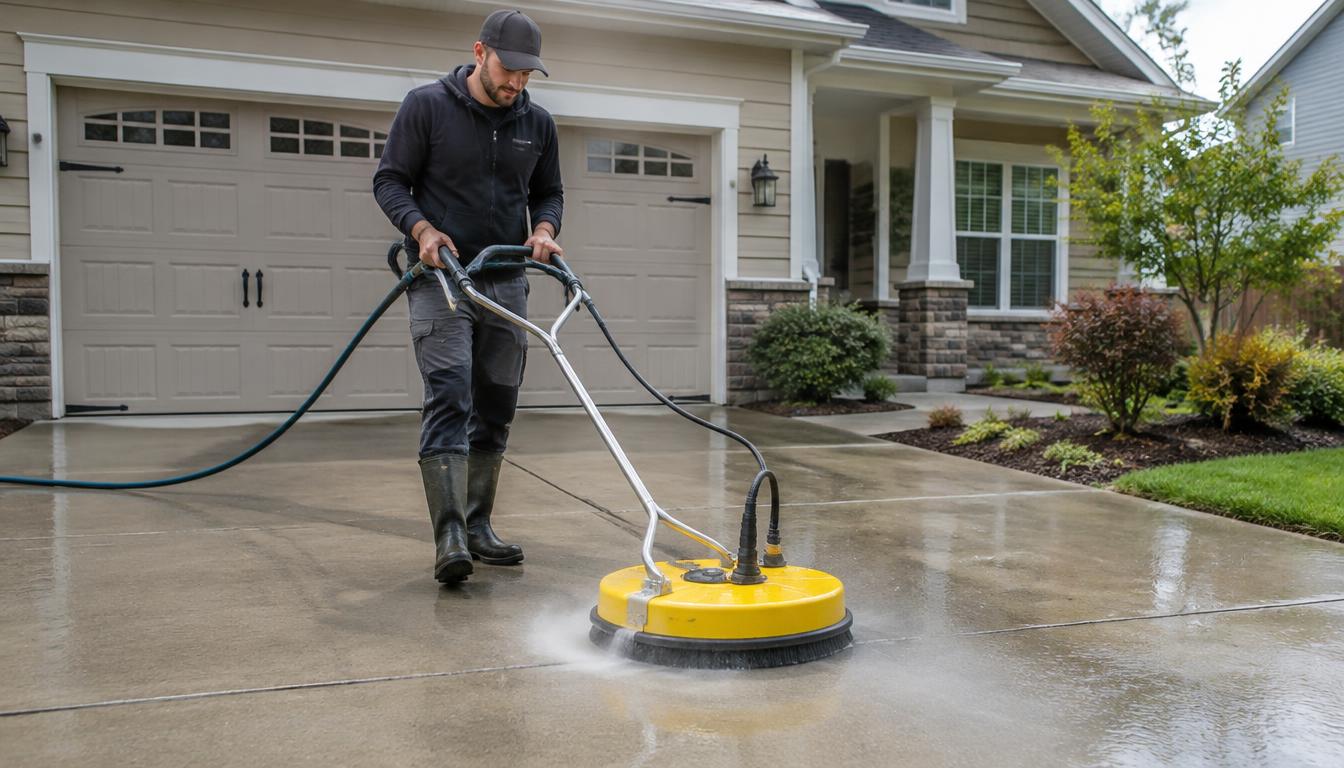
Thumbtack can be worth it for a new pressure washing or exterior cleaning company that needs opportunities, practice quoting, and a way to build reviews. It is less attractive when you need predictable acquisition costs and tightly grouped jobs. The central problem is not that the platform cannot produce customers. It is that a pay-per-contact, multi-pro model can fight the route-density economics pressure washing runs on. Paying for conversations scattered across your service area is different from filling a profitable day of work in one neighborhood.
The honest verdict is to treat Thumbtack as a channel to test, not a business plan to trust without numbers. Based on their published materials, homeowners can consider multiple professionals, and pros can pay for opportunities rather than completed jobs. Confirm current terms directly with Thumbtack before setting a budget. Below, we separate the genuine advantages from the practical drawbacks, show how to calculate the cost of a booked job, and explain when exclusive leads may be a better fit.
How Thumbtack works for pressure washing businesses
Based on their published materials, Thumbtack helps customers find local professionals and lets pros present their services through business profiles. A homeowner looking for driveway cleaning, house washing, or another exterior service can review options and contact professionals. Depending on the current customer journey and settings, customers may contact or get matched with multiple pros. You should not assume that an inquiry reaching your phone represents a customer who is considering only your company.
On the pro side, think in terms of paid opportunities rather than purchased jobs. Based on their published materials, Thumbtack uses lead or contact charges, with pricing and eligibility influenced by the service and current platform arrangements. That description is deliberately broad because the details can change. Review the actual charge triggers, budget controls, targeting choices, and refund terms available to your account. Confirm current terms directly with Thumbtack rather than relying on an old discussion thread or another contractor's bill.
The distinction matters operationally. A homeowner may be exploring prices, checking availability, or collecting several opinions before deciding whether to schedule anything. A genuine request can still fail to become a booking. The customer might choose another company, postpone the project, or discover that the requested work costs more than expected. None of those outcomes automatically means the original opportunity was fake or that a refund will apply.
Your profile, service settings, response process, and estimating habits all affect what happens after contact. Before turning the channel on, decide who answers during working hours and what information you need to quote safely. For pressure washing, that may include the surface, approximate area, condition, access, water availability, and location. The platform can introduce you to someone with a project. You still have to qualify the work, price it properly, and earn the customer's confidence.
The real advantages: getting started, building reviews, and testing demand
The strongest argument for Thumbtack is the relatively low operational barrier to trying a marketplace compared with building a complete marketing system from scratch. A new owner may have equipment, insurance, and the ability to do good work but little online visibility. Setting up a service profile creates another place where a homeowner can discover that business. That does not make acquisition free or easy, but it can shorten the distance between opening the doors and having real sales conversations.
It can also provide opportunities to build a review history. A new exterior cleaning company often faces a credibility gap: the owner knows the work is good, but prospective customers have no reason to know that yet. Completed jobs, accurate photos, and honest review requests can help close that gap over time. Follow the platform's current review rules, ask without pressure, and never buy praise or promise an incentive in exchange for a favorable rating.
Another genuine benefit is demand testing. You can use a controlled trial to learn what homeowners ask about, which neighborhoods produce suitable requests, and which services are easiest for your crew to quote and deliver. Perhaps driveway cleaning creates too many small standalone trips, while house washing conversations produce a better fit. Those are questions your own records can answer. Treat the trial as research with a spending limit, not proof that every available service should stay enabled.
Thumbtack may be particularly useful when the owner's calendar is open and answering quickly is realistic. A newer company can sometimes give inquiries more attention than an established operator working a full route. If that attention turns into profitable bookings, the channel deserves credit. Keep the praise specific, though: a few good jobs show that it can work for your business under those conditions. They do not establish that the same settings or budget will remain profitable through every season.
Why shared contacts can strain pressure washing margins
Pressure washing has a route problem as much as a lead problem. Every job carries time that the customer may never see: driving, loading, unloading, setting up hoses, protecting property, and collecting payment. A small driveway job across town can consume a surprising part of the day even when the actual cleaning is straightforward. When a contact fee gets added to that trip, the amount left to pay the owner and support the business can shrink quickly.
Lower-ticket work leaves less room for acquisition mistakes. The same contact cost can be manageable on a larger exterior cleaning project and painful on a minimum-service visit. If you keep a broad radius to receive more requests, you may also increase unpaid estimating time and travel. More inquiries are not necessarily better when their geography and job size prevent you from assembling a productive route. The right question is whether the resulting work fits the way your company makes money.
Shared shopping behavior adds another layer. Homeowners may message several companies because they want to compare scope, availability, professionalism, and price. That is reasonable customer behavior, not misconduct. But it means your payment buys a chance to compete, not a reservation in the schedule. If several pros incur acquisition costs while only one wins the project, the unsuccessful conversations still have to be funded by the jobs each company eventually books.
Speed can make this harder for an owner-operator. When the job is simple and availability matters, a homeowner may book with the first firm, credible answer rather than wait for every reply. A business with dedicated phone coverage or a call center has a practical advantage over someone handling a wash wand all afternoon. That does not mean the fastest responder always wins, and you should never interrupt safe work to chase a message. It means shared contacts can reward staffing capacity that a small operator does not yet have. Our discussion of <a href='/blog/shared-leads-killing-close-rate'>shared leads and close rates</a> explores that tradeoff further.
Calculate cost per booked job, not just cost per contact
The contact charge is only the starting number. Your cost per booked job is total acquisition spending divided by the number of jobs booked from that spending. Keep the same reporting period and attribution method on both sides. If contacts arrive late in the month and book early in the next one, give those opportunities time to mature before judging the channel. Otherwise, the timing alone can make a useful source look bad or a weak source look better than it is.
Here is a hypothetical example, not a Thumbtack price quote or a claim about typical performance. Suppose a contractor spends $400 acquiring 20 contacts and books five jobs. The average cost per contact is $20, but the acquisition cost per booked job is $80. If only two of those contacts become bookings, the same spending produces a $200 acquisition cost per booked job. Nothing about the original contact price changed. The conversion rate changed the economics.
Now consider another illustrative assumption: each of the five booked jobs sells for $250. That creates $1,250 in booked revenue, not profit. After the $400 acquisition spend, $850 remains before labor, chemicals, fuel, equipment wear, payment processing, insurance, and overhead. You also need to account for cancellations, unpaid invoices, and time spent estimating. If those five customers are far apart, travel may consume room you thought you had in the margin. Replace every example number with your own records.
Track completed, paid work alongside bookings so you can see whether scheduled revenue actually becomes cash. Useful records include the source, contact date, neighborhood, requested service, quoted amount, outcome, reason lost, and amount collected. You can also record administrative time without pretending it has no cost because the owner performed it. Our guide to <a href='/blog/calculate-true-cost-per-acquisition'>calculating true cost per acquisition</a> goes deeper. The goal is not to find a universally acceptable lead price. It is to identify what your own job margins and conversion process can support.
Who Thumbtack fits, and who should be cautious
Thumbtack can fit a new pressure washing company with available capacity, a defined service area, and an owner who can respond reliably. It may also fit a business testing a new service without committing to a larger marketing initiative. The important condition is that the operator has room to learn without depending on every paid contact to become a job. A measured trial is easier to manage when there is a clear budget and no pressure to accept unprofitable work just to stay busy.
An established company may also find value if its response team is strong and its numbers remain healthy. There is no rule that a mature business must avoid marketplaces. If a particular service, neighborhood, or season produces profitable completed work, it makes sense to evaluate that evidence on its merits. Keep the channel accountable to the same margin and scheduling standards you use elsewhere, rather than accepting it because it once produced a good month.
Be more cautious if most of your work is small, your service area is sprawling, or you routinely cannot answer until evening. Those conditions make competition for shared contacts harder to absorb. A company already operating near capacity may gain little from paying for scattered inquiries that interrupt an otherwise efficient route. Likewise, a specialist whose quoting process requires careful inspection should not feel pushed into quick promises simply because another pro might respond first.
Before deciding, write down your minimum acceptable job size, target neighborhoods, response coverage, and maximum acquisition cost based on margin. Set a trial budget you can afford to lose, then define what would justify continuing. Pause if the data shows poor fit instead of increasing spending out of frustration. The decision should be based on your operation, not on whether another contractor online loves or hates the platform. Two competent businesses can get different results because their routes, prices, schedules, and sales processes differ.
How to get more from Thumbtack if you stay
Start with response coverage. Decide who monitors inquiries, when that person is available, and what happens while the crew is working. A useful first reply acknowledges the requested service, asks the next relevant question, and offers a clear step toward an estimate. An instant greeting alone is not the same as helping someone book. Avoid promising a firm price before you understand the surface and condition. Our article on <a href='/blog/speed-to-lead-five-minute-rule'>speed to lead</a> explains why prompt follow-up belongs in your process without replacing sound qualification.
Use photos of your actual work. Show the types of surfaces you clean, the conditions you can handle, and the care you take around landscaping and surrounding property. Keep before-and-after comparisons honest by avoiding misleading lighting or unrelated projects. A homeowner should be able to understand what you do without decoding technical jargon. Explain the difference between services when it matters, including why the safest cleaning method may depend on the surface rather than the customer's preferred label.
Request reviews after completed work and make the request straightforward. Ask for an honest description of the experience, not a scripted endorsement. At the same time, improve the basics that make a review worth leaving: clear arrival expectations, a defined scope, courteous communication, and a clean handoff. Reviews can support trust, but they cannot repair confusing estimates or repeated scheduling problems. Keep customer permissions and platform rules in mind when using project photos or feedback in your profile.
Finally, tighten the radius and service menu. A smaller area can be more useful than a larger pool of requests if it keeps travel manageable. Review the targeting options currently available and exclude work you cannot price or deliver profitably. Where appropriate, explain your minimum service charge and offer relevant additional work without pressuring the homeowner. Review outcomes regularly, not just when a bill feels high. Keep settings that produce suitable, profitable jobs and change or pause those that repeatedly attract work outside your business model.
The alternative: exclusive pressure washing leads
Exclusive leads address one specific problem: the lead seller distributes the same opportunity to only one purchasing company rather than several competitors. That can remove seller-created competition for that inquiry. It does not mean the homeowner cannot independently contact another cleaner, and it does not guarantee that the customer will answer, accept your price, or book. You still need a credible business, a useful response, and an estimate that matches the work. Exclusivity changes the distribution model, not the customer's freedom to choose.
Lead Search Pros sells exclusive leads to one company per market with real-time delivery. Packages are paid upfront with no retainer, and the arrangement is month-to-month with 30-day cancellation. Qualifying invalid leads reported within 72 hours receive free replacement under the published lead policy. Those are the policies to evaluate, rather than assuming that exclusive means every contact is perfect. Read the <a href='/lead-policy'>published lead policy</a> to understand qualification and reporting requirements before purchasing.
You can review the <a href='/industries/pressure-washing-leads'>pressure washing leads page</a>, see <a href='/how-it-works'>how it works</a>, and check <a href='/lead-pricing'>lead pricing</a> when comparing options. Pay attention to cash flow as well as unit cost because an upfront package is still an upfront commitment. Ask questions about terms you do not understand, and compare the offer against what your own crew can service. A different purchasing structure is not automatically a better fit for every stage of a business.
Use the same scorecard for exclusive and marketplace leads: suitable geography, workable scope, contactability, booked jobs, completed revenue, and acquisition cost relative to margin. Exclusive opportunities may suit an operator who wants fewer seller-created competitors, but there is no honest basis for promising a particular close rate. Our <a href='/blog/thumbtack-vs-lead-search-pros'>Thumbtack versus Lead Search Pros comparison</a> can help frame the distinction. Judge either option by the work you actually win and deliver, not by the label on the lead.
The verdict: buy opportunities that fit your route and margin
Thumbtack is worth considering when you need an accessible way to find prospective customers and have the capacity to handle competitive inquiries well. It is not automatically worth keeping once your schedule fills or your acquisition costs rise. A channel that helped launch the company can become a weaker fit as your priorities shift toward route density, larger projects, and predictable crew utilization. Reassessing it is normal business management, not evidence that the original decision was wrong.
Make the next step concrete. Review a completed group of inquiries, calculate booked and paid outcomes, and map where the jobs happened. Ask whether those customers filled useful gaps or pulled your crew away from better work. Include the time spent chasing unanswered messages and preparing quotes. If the results support your target margin, continue carefully. If they do not, improve one part of the process or pause instead of treating more volume as the only solution.
If you want to explore a different distribution model, <a href='/contact'>contact Lead Search Pros</a> with questions about the published terms and your market. You do not need to declare one platform universally good or bad to make a sound decision. The best lead source for your pressure washing business is one you can afford, answer, convert, and service profitably. Keep that standard in place whether the opportunity comes from Thumbtack, an exclusive lead package, or a homeowner who found you through a neighbor.
Frequently Asked
Questions & answers
Is Thumbtack worth it for a brand-new pressure washing business?
It can be, especially if you have open capacity, few reviews, and time to respond to inquiries. Use it as a limited test with a clear service radius and a budget you can afford. Track whether contacts turn into profitable completed jobs rather than assuming activity equals progress. It is less suitable if you must win nearly every inquiry to cover the spending or if you cannot respond while prospective customers are deciding.
How much does Thumbtack charge for pressure washing leads?
There is no single price we can responsibly apply to every pressure washing business. Based on their published materials, Thumbtack charges for opportunities under its current pro arrangements, and the details can depend on the service and account settings. Confirm current terms directly with Thumbtack, including charge triggers, budget controls, and refund eligibility. Then use your actual charges and booking outcomes to calculate what customer acquisition costs your business.
Are Thumbtack pressure washing leads exclusive?
Do not assume an inquiry is exclusive to your company. Based on their published materials, customers can explore multiple professionals and may contact or get matched with more than one pro. Confirm the current product details directly with Thumbtack. Regardless of the platform, a homeowner can also shop independently. Even an exclusive lead seller cannot guarantee that the customer has not called a neighbor's cleaner or requested another estimate elsewhere.
What is an acceptable acquisition cost for a pressure washing job?
It depends on your collected revenue, job costs, overhead, travel, and required profit. Work backward from what a typical job can contribute after delivery costs rather than borrowing another contractor's target. A larger project may support more acquisition spending than a small standalone wash. Use conservative assumptions about repeat work until you have records showing customers actually return, and do not count booked revenue as collected revenue when cancellations remain possible.
Can faster replies make shared leads profitable?
Faster, useful replies can help you compete, but they cannot rescue every unprofitable service or oversized radius. You still need suitable requests, clear pricing, and enough margin after acquisition. Build a response process that works safely while crews are on site. If prompt follow-up requires staffing you cannot afford, include that limitation in your evaluation rather than assuming an owner-operator can match a fully staffed office throughout the workday.
Does buying exclusive leads guarantee better results?
No. Exclusivity limits how the seller distributes the opportunity; it does not guarantee contact, a booking, or profit. With Lead Search Pros, review the published lead policy, upfront package terms, and month-to-month arrangement with 30-day cancellation before deciding. Qualifying invalid leads must be reported within 72 hours for free replacement. Compare actual outcomes against your margins and route needs, using the same standards you would apply to any other acquisition source.
Put this into practice
Check your market for exclusive leads
See whether your service area and category are still open for exclusive representation.
Check availability