Local SEO
Review Velocity and Reputation Management: The Local Ranking Lever Most Contractors Ignore
Why review count, rating, recency, and velocity each matter differently for map pack ranking and AI recommendations, and how to build a review-ask system that fits real field operations.
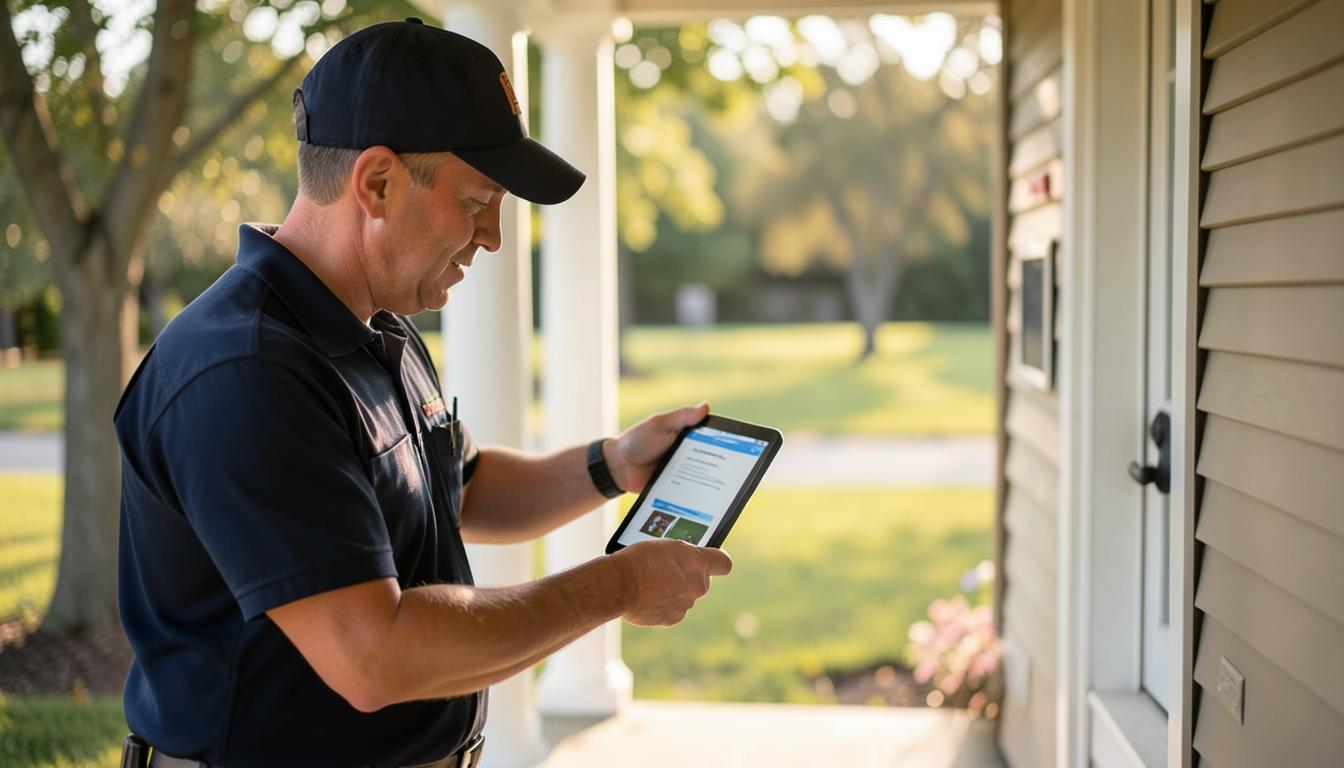
Most contractors treat reviews as a scorecard: a number on a business card or a badge on the website. That undersells what reviews actually do. They are one of the few ranking and trust signals that Google, other platforms, and AI assistants all read the same way, and they are almost entirely within a business's control — unlike backlinks or algorithm updates.
The businesses that win the map pack in competitive metros rarely have the highest rating. They have the highest steady rate of new, detailed, recent reviews. That distinction — velocity over volume — is the part most owners miss, and it is the part that determines whether your profile looks alive or abandoned to both a search algorithm and a homeowner scrolling through five open tabs.
This guide covers how reviews influence ranking and conversion, how to build an ask system that survives contact with a busy field crew, what crosses the line into policy violation, how to respond to good and bad reviews without creating legal exposure, and how to mine review language for your service pages. For the surrounding local SEO fundamentals, see the local SEO playbook.
Reviews are not one signal — they are five
Rating, count, recency, velocity, and text content each do different work, and treating them as a single "reviews" metric leads to the wrong fixes. A 4.9 rating built from 40 reviews collected two years ago signals something very different than a 4.6 built from 400 reviews with 20 arriving last month.
Rating is the threshold check — most consumers and algorithms treat anything below roughly 4.0 as disqualifying, but above that, rating differences of a tenth of a point matter far less than people assume. Count establishes baseline credibility and is one of the more heavily weighted local ranking factors, particularly relative to nearby competitors.
Recency and velocity are the ones businesses neglect. A profile that hasn't had a new review in three months reads as inactive to both a ranking algorithm and a prospect, regardless of the total count sitting on it. Text content, meanwhile, is the raw material both Google's understanding of your services and an AI assistant's summary of your business draw from — vague five-word reviews do almost none of that work.
How reviews influence ranking, clicks, and AI recommendations
In the map pack, review signals sit alongside proximity and relevance as one of the three broad factors Google has confirmed it weighs. Businesses with a steady flow of recent reviews and specific service mentions tend to outrank higher-rated competitors whose review activity has gone stale.
Beyond ranking, reviews affect the click itself. In a set of similar map pack results, prospects consistently favor listings with visibly higher review counts and recent activity, even when the price and service look identical. That is a click-through effect, not a ranking effect, and it compounds on top of any ranking advantage.
The newer dimension is AI recommendation. When a homeowner asks an assistant to recommend a roofer or HVAC company nearby, the assistant is frequently summarizing aggregate review sentiment and pulling specific phrases from review text rather than reciting a star rating. A business with reviews that name specific services, describe outcomes, and read as recent is easier for that summarization to represent favorably than one with a high but generic and dated rating.
Building an ask system that survives real field operations
The single biggest reason review programs fail is that they depend on a technician remembering to ask at the end of a long day. A durable system removes that dependency by triggering the ask from an event in your job workflow, not from someone's memory.
The best moment to ask is immediately after the job is confirmed complete and payment has cleared — not weeks later during a billing follow-up, and not before the work is finished. For multi-day jobs, ask after final walkthrough, not after the first visit.
Who asks
The technician or crew lead should ask in person or verbally flag it, but the actual review link should come from an automated text or email, not a verbal request alone. In-person asks feel more genuine and get higher completion when followed immediately by a digital nudge with the direct link.
SMS vs. email vs. QR
SMS consistently outperforms email for review completion among home service customers because it matches how they already communicate about scheduling. Email works as a secondary touch a day or two later for anyone who didn't act on the text. QR codes on invoices, yard signs, and vehicle decals work best as a passive capture layer, not a primary strategy — they convert opportunistically but shouldn't be your only mechanism.
The direct link matters
Send the shortest possible path to the review box — a direct Google review link, not your homepage or a generic profile URL. Every extra click or search step costs completions. Generate the link once from your Google Business Profile and reuse it in every template.
Realistic velocity targets by business size
Targets should scale with job volume, not be treated as a flat number. A single-crew business completing 15-20 jobs a month should aim for 4-8 new reviews monthly; a multi-crew regional operator completing 100+ jobs should aim for 20-40. The ratio that matters more than the raw number is completion rate against jobs closed — somewhere between 15% and 30% is a reasonable, sustainable range for a well-run ask system.
Chasing a much higher completion rate usually means the ask is being pushed too aggressively or incentivized in ways that risk policy violations, covered next.
Review gating and incentives: what violates policy, and why it backfires
Review gating — filtering customers by asking about their experience first and only sending happy customers to the public review, while diverting unhappy ones to a private form — is explicitly against Google's review policies and against most other platforms' terms as well. Platforms have gotten better at detecting the lopsided rating distributions this produces, and violations can result in review removal or profile suspension.
Offering a discount, gift card, or entry into a drawing in exchange for a review is also a policy violation on Google, even if you don't specify it has to be positive. The safer and equally effective approach is asking every customer, regardless of expected sentiment, and making the ask easy rather than incentivized. A steady, ungated ask process produces a more credible rating distribution and holds up better under scrutiny than a gated one that looks suspiciously clean.
Responding to reviews without creating legal exposure
Every review deserves a response, and response rate itself is a modest but real signal to both prospects and algorithms. The tone and content of the response matter more than speed.
Positive reviews
Thank the customer by name, reference the specific service if mentioned, and avoid generic copy-paste replies across every review — both readers and AI summarization treat identical boilerplate as lower-value signal than varied, specific responses.
Mixed reviews
Acknowledge the specific concern without being defensive, state what was done or will be done to address it, and invite further contact off-platform. Do not argue details of the job publicly even if your records disagree — that plays out badly to every future reader.
Hostile or unfair reviews
Stay factual and brief, avoid admitting fault or liability in writing, and never disclose customer-specific details like pricing or property information in a public reply, which can create privacy exposure. A calm, professional response to an unreasonable review often reads better to future prospects than the review itself.
Handling fake or defamatory reviews
Google will remove reviews that violate its policies — spam, conflict of interest, off-topic content, or content that's clearly fabricated — but it will not remove a review simply because it's negative or because you dispute the facts. Flag through the profile's "report review" option and, for clearly fraudulent patterns (a competitor, an ex-employee, a review for a job you have no record of), provide specifics in the flag rather than a generic dispute.
Removal timelines vary widely and there's no guaranteed outcome. For content that's actually defamatory rather than just negative, a legal consultation is a separate track from the platform flagging process — but that should be reserved for genuinely false factual claims, not ordinary dissatisfaction.
Mining review text for service pages and FAQs
Detailed reviews are a free source of the exact language customers use to describe problems, which rarely matches the language a business uses internally. A customer writing "our upstairs never got cold in summer, and they found the duct issue in twenty minutes" is handing you both a service-page pain point and an FAQ answer in their own words.
Periodically read through your last 50-100 reviews and pull recurring phrases, specific problems named, and objections that got resolved. Feed those into service page copy, FAQ sections, and even ad copy — it keeps language grounded in how real customers describe the work rather than how the business describes itself.
Platforms beyond Google that matter by vertical
Google carries the most ranking and visibility weight for nearly every local service vertical, but it isn't the only platform worth managing. Home service contractors should maintain presence on Angi, HomeAdvisor, and the Better Business Bureau, all of which surface in branded searches. Roofing and solar businesses should watch Yelp, since it still carries weight in some metros and integrates with insurance-adjacent referral networks.
Mortgage professionals should prioritize Zillow and NMLS-linked review displays, which prospects check specifically during vetting. Moving companies see outsized traffic from Google plus industry-specific sites like moveBuddha review aggregation. The rule of thumb: claim and monitor the two or three platforms your specific vertical's buyers actually check before committing significant time to a fourth or fifth.
Measuring the effect on lead volume and cost per acquisition
Reviews are hard to isolate as a single-variable test, but two measurements make the effect visible over time. Track map pack impression and click data in Google Business Profile insights month over month against review count and recency — a steady climb in reviews that coincides with rising impressions is a meaningful correlation even without a controlled test.
Second, track close rate on inbound calls and form leads before and after a deliberate review push. Prospects who mention having read reviews before calling typically close at a noticeably higher rate than cold inbound, which shows up as a lower blended cost per acquisition even if lead volume itself doesn't move much. If you're evaluating channels overall, see how reviews fit into the broader mix in our local lead channels comparison, or talk through your specific setup at a booking call.
Frequently Asked
Questions & answers
How many new reviews should a small contractor aim for each month?
A single-crew business completing 15-20 jobs monthly should target roughly 4-8 new reviews, which corresponds to a completion rate of 15-30% of closed jobs. Larger multi-crew operations should scale that ratio up with job volume rather than chasing a fixed number.
Does responding to negative reviews actually help?
Yes. A calm, factual response often reads better to future prospects than the negative review itself, and response rate is a modest positive signal to both platforms and readers. Avoid admitting fault or disclosing job specifics in the reply.
Is offering a discount for a review against the rules?
Yes, on Google and most major platforms, incentivizing reviews in any form — discounts, gift cards, drawing entries — violates the terms of service, even if you don't specify the review must be positive. Ask every customer without incentives instead.
Can I get a fake or unfair review removed?
Platforms will remove reviews that violate their policies, such as spam or conflict-of-interest content, but not simply because they're negative or disputed. Flag the review with specific evidence rather than a generic complaint, and expect no guaranteed timeline or outcome.
Do AI assistants actually read my reviews?
Increasingly, yes. When someone asks an assistant to recommend a local business, it often draws on aggregate review sentiment and specific review language rather than reciting a star rating alone, which is why detailed, recent reviews matter more than a high but stale rating.
What's the fastest way to ask for a review after a job?
Send an SMS with a direct Google review link immediately after the job is marked complete and payment clears, ideally after the technician has already mentioned it verbally. Follow up with an email a day or two later for anyone who hasn't acted.
Which review platforms matter beyond Google?
It depends on vertical: home service contractors should watch Angi, HomeAdvisor, and the BBB; mortgage professionals should prioritize Zillow; roofing and solar should monitor Yelp. Claim the two or three platforms your specific buyers actually check rather than spreading thin.
How do I measure whether reviews are affecting lead cost?
Track Google Business Profile impressions and clicks against review count and recency over time, and compare close rates on inbound leads before and after a deliberate review push. A rising review trend paired with rising impressions and a lower blended cost per acquisition is a strong practical signal even without a controlled test.
Put this into practice
Check your market for exclusive leads
See whether your service area and category are still open for exclusive representation.
Check availability